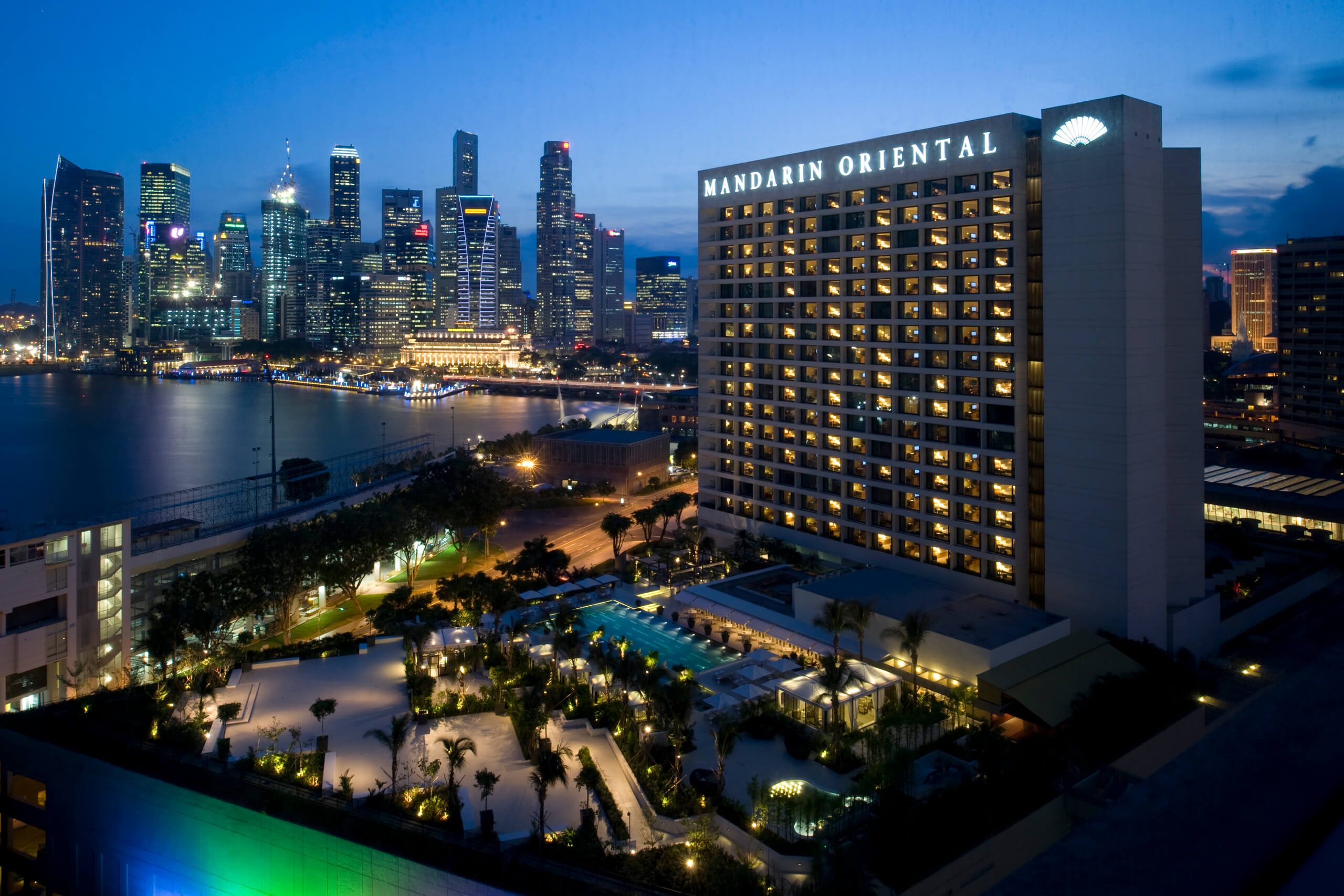
You’ve probably seen the Marina Bay skyline a thousand times in photos. It's iconic. But sitting right in the heart of that glittering curve is the Mandarin Oriental Singapore hotel, a property that recently decided "good enough" wasn't an option anymore. They shut the whole thing down for six months. Bold move. Most hotels just paint a few walls and call it a "refresh," but this was a total transformation led by interior designer Jeffrey Wilkes.
Honestly, it needed it.
The "new" Mandarin Oriental Singapore hotel feels less like a stiff corporate hub and more like a lush, sun-drenched residence. It’s weirdly personal for a building that large. When you walk into the atrium now, the light hits differently. They’ve swapped the old-school heavy luxury for something Wilkes calls "exceptionally Singaporean." It’s bright. It’s got these deep batik patterns and orchids everywhere. It feels alive.
The Design Shift: More Than Just New Carpets
Most people don't realize how much the architecture of this place matters. It's a fan-shaped building, a signature of the late John Portman. That shape used to feel a bit clinical, maybe even a little cold back in the 80s and 90s. Now? The redesign uses that curvature to create these panoramic views that feel like they're pulling the harbor right into your room.
The color palette is a huge departure. Think dapples of green, shiny gold, and lavender. It mirrors the Garden City vibe outside. If you’re staying in one of the Sea View rooms, you aren't just looking at the water; the room is designed to make you feel like you’re floating on it. The floor-to-ceiling windows aren't new, but the way the furniture is positioned—angled toward the horizon—is a subtle trick that makes a massive difference in how you spend your time there. You actually want to sit and look out, rather than just using the room as a place to crash.
Why the HAUS 65 Club Lounge is a Game Changer
Let’s talk about the Club Lounge. Usually, these are just rooms with some free coffee and a tired buffet. At the Mandarin Oriental Singapore hotel, they rebranded it as HAUS 65. It’s sophisticated.
They’ve partnered with the Mandala Club, which is a big deal in the local social scene. This means the lounge isn't just full of tired travelers; it actually has a pulse. You might find a wine tasting led by a Master Sommelier or a talk by a local artist. It’s a clever way to bridge the gap between "tourist" and "local."
- The Wine: Curated by experts, not just "house red."
- The Vibe: Private members' club, not an airport lounge.
- The Perks: Specialized concierge services that actually know the city’s hidden spots.
If you’re a fan of high tea, you know Singapore takes it seriously. But here, the experience in the lobby lounge is less about doilies and more about contemporary elegance. It’s a place where business deals happen next to families celebrating birthdays, and neither feels out of place.
Dining That Isn't Just "Hotel Food"
People used to go to hotel restaurants because they were convenient. Now, people go to the Mandarin Oriental Singapore hotel specifically to eat, which is a high bar in a city like Singapore where the food scene is absolutely cutthroat.
Dolce Vita is still the go-to for Italian, sitting right by the pool. There’s something about eating handmade pasta while looking at the skyscraper reflections in the water that just works. Then there’s Cherry Garden. If you haven't had the dim sum there, you're missing out on a local institution. The entrance is this heavy, traditional wooden gate that makes you feel like you’re stepping into another era. The food, though, is sharp and modern.
And then there’s MO BAR. It’s consistently ranked among the best bars in the world (often appearing on the Asia’s 50 Best Bars list). It’s not just about the drinks; it’s the storytelling. Their menu usually follows a nomadic journey across the Pacific, with cocktails inspired by different ports of call. It’s nerdy, it’s delicious, and the view of the ArtScience Museum from the bar stools is probably the best in the city.
The Reality of the Location
Is it central? Yes. But "central" in Singapore can mean a lot of things.
The hotel is physically connected to Marina Square mall. This is a blessing and a curse. Blessing: you can walk to shops, pharmacies, and cheap eats without breaking a sweat in the 90% humidity. Curse: the mall itself is a bit dated compared to the ultra-luxury of the hotel. But once you cross the link bridge into the Esplanade or walk toward the Formula 1 pit building, you realize you're at the literal epicenter of the city's events.
If you’re here for the Singapore Grand Prix, this is the place. Period. You can practically smell the burnt rubber from the balconies. The track runs right past the hotel. During race week, the energy here is chaotic in the best way possible.
What Most People Get Wrong About the Mandarin Oriental
A common misconception is that this is a "business hotel." Sure, the tech is there. The Wi-Fi is blazing fast, and there are plenty of spots to plug in a MacBook. But the soul of the place has shifted toward leisure and "bleisure."
The spa is a testament to this. It’s not just a place for a quick massage. They offer "Digital Wellness" escapes where they literally take your phone away so you can focus on the treatment. It sounds gimmicky until you’re three hours deep into a treatment and realize you haven't thought about your inbox once.
Another thing? The pool. It’s an outdoor oasis that feels surprisingly private despite being surrounded by towers. They have these "cabanas" that are more like mini-suites. If you're traveling with kids, the new family suites are actually thoughtful. They didn't just throw a rollaway bed in a corner; they designed themed rooms with bunk beds and play areas that don't look like an eyesore.
Sustainability: The Elephant in the Room
In 2026, you can't talk about a luxury hotel without mentioning its footprint. The Mandarin Oriental Singapore hotel has done away with single-use plastics. You’ll find glass bottles, wooden key cards, and an incredibly sophisticated food waste management system in the kitchens. They aren't shouting about it with "green" stickers everywhere, but the effort is woven into the operations. It’s a quiet responsibility.
Nuance and Limitations
Look, no hotel is perfect. The Mandarin Oriental Singapore hotel is expensive. It’s a premium experience, and the price tag reflects that. If you're looking for a budget-friendly stay, this isn't it.
Also, because of its atrium design, the sound can sometimes travel. If there's a massive event in the lobby, you might hear a faint hum of activity in the hallways. Most people find it adds to the "buzz," but if you're looking for total, tomb-like silence, it's something to keep in mind.
The service is legendary, but during peak check-in times (usually around 3:00 PM), even the best teams can get stretched. The difference here is how they handle it—usually with a glass of something cold and a genuine apology rather than a robotic "please wait."
Actionable Advice for Your Stay
If you are planning a visit to the Mandarin Oriental Singapore hotel, don't just book the cheapest room available. The experience changes drastically depending on how you play it.
- Book the Marina Bay View: It’s worth the extra couple of hundred dollars. Watching the light show at Marina Bay Sands from your own bed is a core memory.
- Visit MO BAR at Sunset: The transition from day to night over the harbor is stunning. Make a reservation at least two days in advance; it fills up with locals, not just guests.
- Use the "Life Livedly" Approach: Take advantage of the curated local tours the concierge offers. They have access to private kitchens and back-alley boutiques in Tiong Bahru that you won't find on TripAdvisor.
- Check the Event Calendar: If there’s a major convention at Suntec or a race at the Marina, the area becomes incredibly crowded. If you want peace, pick the "shoulder" weeks.
- Eat at Empress: It’s a short walk away at the Asian Civilisations Museum (owned by the same group), and the outdoor seating by the Singapore River is magical.
The Mandarin Oriental Singapore hotel isn't just a place to sleep. It’s a lens through which to see a city that is constantly reinventing itself. After its own rebirth, the hotel feels more aligned with Singapore’s identity than ever before—bold, green, and unapologetically high-end. Whether you're there for the dim sum or the skyline, it's a stay that actually stays with you.
Next Steps for Your Trip
To get the most out of your stay, check the official Mandarin Oriental website for "Fans of M.O." exclusive rates, which often include breakfast and late check-out. If you're a foodie, email the concierge a week before your arrival to snag a table at Cherry Garden for their weekend brunch—it's one of the hardest seats to get in the city. For a quiet moment, head to the pool deck at 6:30 AM; watching the sun rise behind the Singapore Flyer is the best way to start a day in the tropics.