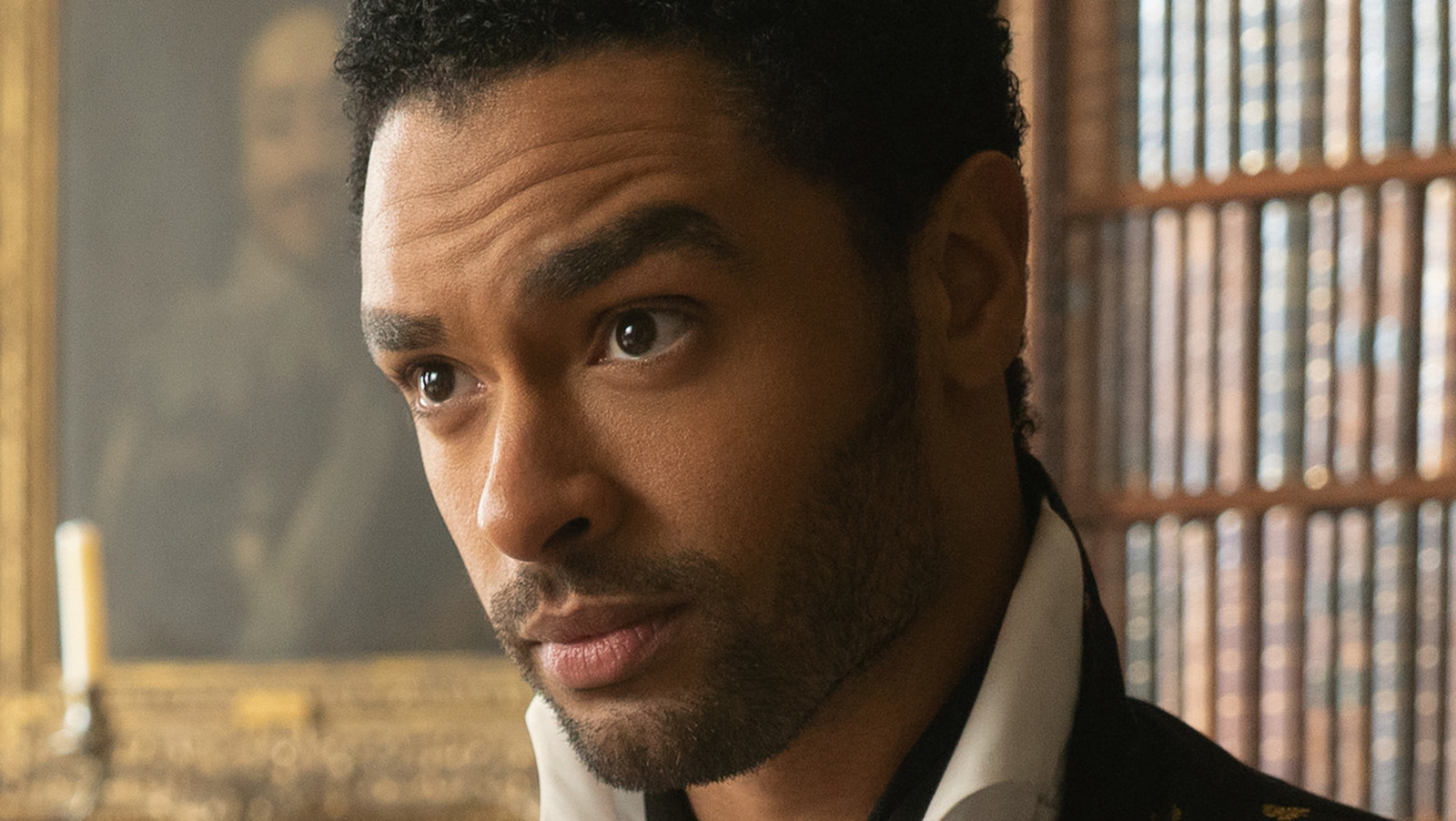
The spoon. You know the one. That single, lingering shot of Simon Basset, the Duke of Hastings, licking a silver spoon became the cultural equivalent of a solar flare in late 2020. It launched a thousand memes, crashed servers, and turned Regé-Jean Page into a global supernova overnight. But then, as quickly as he arrived, he was gone. No cameo in Season 2. No dramatic return for Season 3. Just a looming absence and a lot of confused fans wondering how a show could lose its heartbeat and keep on ticking.
Honestly, the "Duke of Hastings" phenomenon was a perfect storm of timing and casting. When Bridgerton premiered on Netflix, the world was stuck indoors, desperate for something that felt like a high-budget, Regency-era hug with a side of scandalous gossip. Simon Basset wasn't just another period drama lead; he was a subversion of the "Byronic hero" trope. He was brooding, yeah, but he was also deeply traumatized by a stutter and a father who basically treated him like a failed experiment.
The Reality of the One-Season Deal
Most people assume there was some behind-the-scenes drama or a contract dispute that kept the Duke of Hastings away from the subsequent seasons. That's actually not what happened. Regé-Jean Page has been incredibly vocal about the fact that he signed on for a one-season arc. From the jump, the plan was: Simon meets Daphne, Simon hates his dad, Simon marries Daphne, they have a baby. Done.
He told Variety back in 2021 that the "limited series" feel of the role was exactly what appealed to him. In the romance novel world—specifically the books by Julia Quinn—each installment focuses on a different sibling. Simon's story is the focus of The Duke and I. Once that book ends, he becomes a background character. A peripheral figure who shows up at a ball or two to nod at a brother-in-law. For an actor looking to jump into film, staying on to play "Daphne’s husband who stands in the corner" probably didn't feel like a great career move.
It’s kind of wild to think about now, but the producers even offered him a guest spot for Season 2—reportedly around $50,000 per episode—and he still passed. He wanted the performance to stand as a self-contained piece of art. You have to respect the hustle, even if it left a Duke-sized hole in our hearts.
Why Simon Basset Mattered More Than Just the Romance
Let’s get real for a second. The Duke of Hastings changed how we look at period dramas. Before Bridgerton, the "ton" was almost exclusively white in mainstream media. Shonda Rhimes and Chris Van Dusen used "color-conscious" casting to reimagine 1813 London, and Simon was the centerpiece of that experiment.
His backstory provided a weight that the show desperately needed to avoid being "just" a soap opera. His father, the previous Duke, was obsessed with the Basset line and the "precarity" of their position in society. This added a layer of racial tension and pressure that isn't explicitly spelled out in every line of dialogue but lives in the subtext of every scene where Simon refuses to sire an heir. His vow to end the Basset line wasn't just a middle finger to his dad; it was a response to the crushing weight of institutional expectations.
Breaking Down the Trauma
Simon’s stutter is a huge part of the character that often gets overshadowed by the, uh, steamier scenes. It’s a physical manifestation of his childhood trauma. Watching him navigate the high-society balls while carrying the memory of his father's rejection makes him human. It makes him more than just a "Rake."
- He was raised by Lady Danbury (the GOAT, let's be honest).
- He spent years traveling the world to avoid his responsibilities.
- He used his reputation as a shield.
When he finally confronts his past, it’s not just about Daphne. It’s about Simon realizing that his father’s cruelty doesn’t have to define his future. That’s a universal theme, whether you're wearing a cravat or a t-shirt.
The Conflict: Why Fans Can't Let Go
The biggest problem with the Duke of Hastings leaving is that the show didn't really know how to talk about him afterward. In Season 2 and Season 3, Daphne shows up for family events, weddings, and "the season" completely alone. She makes vague references to him being "at home" or "tending to the estate."
It feels clunky.
It’s the "Poochie" problem from The Simpsons—whenever he’s not on screen, all the other characters should be asking, "Where's the Duke?" Because in the context of their high-society world, a Duke is a massive deal. He wouldn't just miss his brother-in-law's wedding or a massive family scandal. The showrunners have had to do some serious narrative gymnastics to explain why the most famous man in London is suddenly a ghost.
What Most People Get Wrong About the "Ending"
There’s this misconception that Simon and Daphne’s story was "unfinished" because they didn't show enough of their life as parents. In reality, their arc is one of the few in the series that is truly complete. They went from a fake courtship—a classic trope—to a genuine, messy, difficult marriage. They dealt with the "pull-out method" controversy (which was a whole thing on Twitter, remember?) and came out the other side with a child named August.
If Simon had stayed, his character would have been diluted. We would have seen him arguing about estate taxes or nodding politely at dinner. By leaving at the peak of his popularity, Regé-Jean Page ensured that the Duke of Hastings remained an icon rather than a background extra. It’s the "leave them wanting more" strategy, and it worked perfectly.
The Impact on Future Seasons
Because of the Duke, every subsequent male lead in Bridgerton has been measured against a nearly impossible standard. Anthony Bridgerton in Season 2 had to be "The Reformed Rake" 2.0. Colin in Season 3 had to bring a different kind of energy. But the Duke’s shadow is long. He set the tone for the show’s sexuality and its aesthetic.
Interestingly, the show has pivoted toward more ensemble-driven storytelling lately, perhaps realizing they can't rely on a single breakout star to carry the entire brand. They need the whole family. But let’s be honest: if Netflix announced a "Duke and Duchess" spin-off tomorrow, the internet would melt.
Actionable Takeaways for Fans and Writers
If you’re looking to capture even a fraction of the "Duke of Hastings" energy in your own creative work or just want to understand the mechanics of why this character worked so well, here’s the breakdown:
The Power of the Vow
Simon was defined by a negative goal (I will not have a child). This creates immediate tension with the female lead's goal. If you're writing a character, give them a "Never" rule. It forces them into a corner and creates automatic drama when they inevitably have to break it.
Visual Storytelling Over Dialogue
Think about the spoon. Think about the boxing matches. Simon Basset was a character who "did" more than he "said." In a medium like television, a brooding look or a physical hobby (like boxing) tells the audience more about a character’s internal state than a five-minute monologue ever could.
The Role of the Mentor
Lady Danbury is the key to Simon’s character. Without her, he’s just a sad guy with a title. Every "broken" hero needs a mentor who isn't afraid to call them on their crap. It grounds the character and gives them a tether to the real world.
Accepting the Exit
The biggest lesson from the Duke’s departure is that sometimes, a story is better because it ends. Don't drag out a narrative just because it's popular. The Duke of Hastings remains legendary precisely because we didn't get to see him get old and boring. He’s frozen in time as the ultimate romantic lead.
If you’re revisiting the series, pay attention to the silence in Simon’s scenes. Notice how his stutter returns only when he’s feeling cornered or small. It’s a masterclass in acting that goes way beyond just looking good in a velvet waistcoat. The Duke of Hastings might be gone from the screen, but his influence on the "Romantasy" and period drama genres is basically permanent at this point.