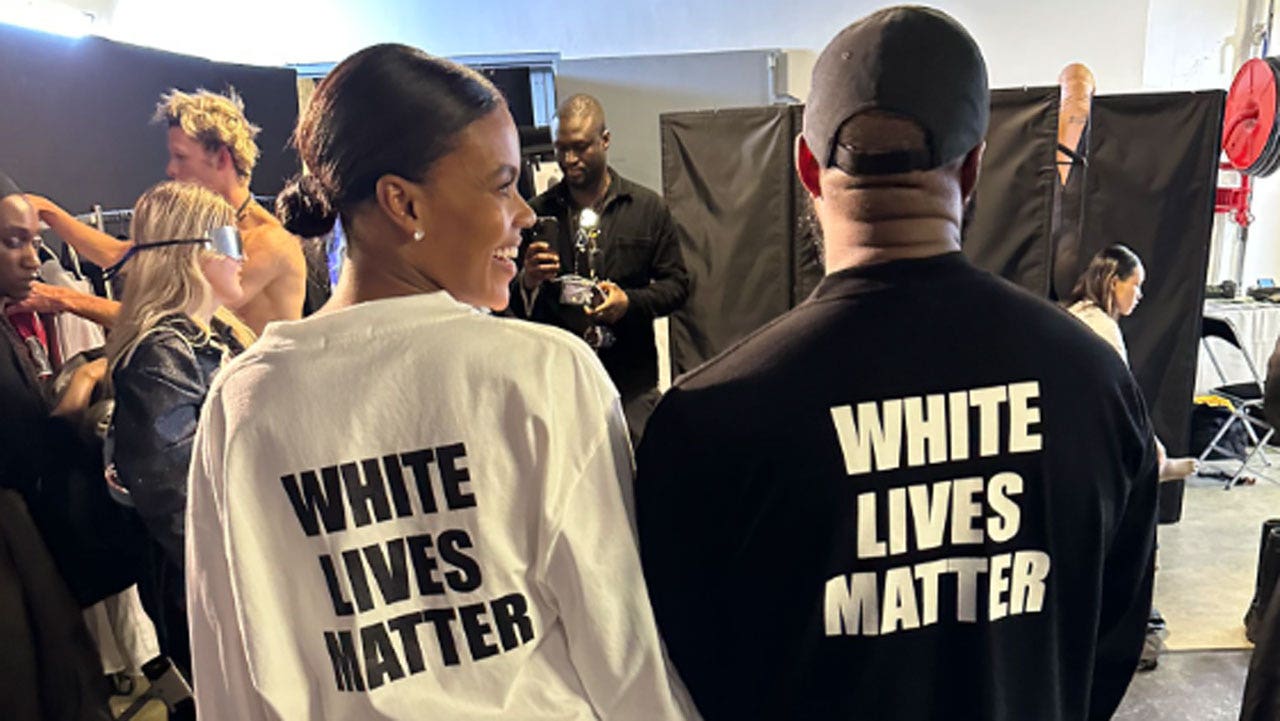
Candace Owens doesn't do "quiet." You've probably noticed that by now. Whether she’s wearing a "White Lives Matter" shirt or debating the moon landing, she lives for the friction. But lately, the friction has turned into a total firestorm. People are throwing around the word "antisemitism" like it’s going out of style, and for the first time, the heat isn't just coming from the left. It's coming from inside her own house—or at least, her former one.
If you’ve been following the drama, you know the big break happened in March 2024. The Daily Wire, the conservative media titan co-founded by Ben Shapiro, basically cut her loose. It wasn't a "we wish her the best" kind of breakup. It was messy. It was public. And it centered almost entirely on how she talks about Jewish people and the State of Israel.
The Breaking Point at The Daily Wire
Honestly, the tension between Candace and Ben Shapiro had been bubbling for months. Shapiro is a staunch, practicing Jew. Candace? Well, she started leaning into a very specific kind of rhetoric after the October 7 attacks in Israel. She wasn't just criticizing foreign policy; she was using phrases that made a lot of people jumpy.
Take the "Christ is King" thing.
On its own, it’s a standard Christian confession. No big deal, right? But context is everything. When she tweeted it during a heated spat with Shapiro, critics called it a "dog whistle." Why? Because it’s been co-opted by fringe groups to taunt Jewish people—basically saying, "Our guy won, yours didn't." Jeremy Boreing, the CEO of The Daily Wire, eventually had to step in and explain that even a shovel can be a murder weapon if you use it the wrong way.
Then there was the "blood libel" tweet. Candace liked a post on X (formerly Twitter) asking Rabbi Shmuley Boteach if he was "drunk on Christian blood again." That’s a centuries-old trope used to incite violence against Jews. For The Daily Wire, that seemed to be the final straw.
Candace Owens and the "Frankist" Conspiracy
Since going independent, things have gotten... weirder. She hasn't backed down. If anything, she’s gone deeper into the rabbit hole. By mid-2025, she was regularly talking about "Frankists" on her podcast.
If you've never heard of them, you're not alone. The Frankists were a 18th-century Jewish sect that most people—including most Jews—haven't thought about in 200 years. But in Candace’s world, they’re a shadowy group of "evil" people who supposedly control global events.
Critics, including the Anti-Defamation League (ADL), argue this is just a repackaged version of the "secret Jewish cabal" myth. It's a way to talk about Jewish power without saying "the Jews." She calls Israel an "occult nation" and has even suggested the Star of David is a "cultic hexagram."
Why This Matters in 2026
We aren't just talking about a Twitter feud anymore. A study by the Jewish People Policy Institute (JPPI) released in late 2025 found that 75% of Owens' videos mentioning Jews were classified as antisemitic. That’s a huge jump from previous years.
She’s also found herself in a strange alliance with figures like Nick Fuentes, a self-proclaimed white nationalist. When Fuentes praised her for "going to war with the Jews," Candace didn't exactly run the other way. She claimed she didn't know him but used the opportunity to say she was being "smeared" by a "network."
It’s a classic Candace move:
- Say something provocative.
- Get criticized.
- Claim the criticism is proof of a conspiracy against her.
- Grow her audience.
It works. She currently has nearly 7 million followers on X and millions of subscribers on YouTube. For her fans, she’s a truth-teller who isn't afraid of "cancel culture." For her detractors, she’s mainstreaming dangerous tropes that lead to real-world hate.
The Legal and Personal Fallout
It hasn't all been podcast views and likes, though. There’s been real-world danger. In 2025, a man named Haim Braverman pleaded guilty to making death threats against her. He was apparently furious over her comments about Rabbi Menachem Mendel Schneerson, a beloved figure in the Chabad-Lubavitch movement.
Candace used the incident to claim she was being targeted by "deranged Zionists."
She’s also faced legal heat. The French president and his wife actually sued her for defamation in 2025 after she pushed a conspiracy theory about them. It seems no topic is too "out there" for her brand of commentary these days.
How to Spot the Rhetoric
When people discuss Candace Owens antisemitism, they usually point to a few specific patterns. Knowing these helps you understand why the controversy isn't going away.
- The "Good Jew vs. Bad Jew" Narrative: She often talks about "political Jews" or "secular Jews" as a way to criticize the group while maintaining "plausible deniability."
- The Shield Argument: She claims that Jewish people use the Holocaust or the label of antisemitism to "shield" themselves from any criticism of Israel or their own actions.
- Ancient Tropes: Bringing up 19th-century screeds, blood libel, or obscure 18th-century sects to explain modern political power.
Actionable Insights: Navigating the Noise
If you’re trying to make sense of the headlines, here is how to handle the "Candace effect" without getting lost in the spin:
- Check the Source: Candace often cites "verifiable proof" (like the time she claimed Rabbis were bribing pastors with Bitcoin). Before sharing, look for independent verification. In the Bitcoin case, the organization involved (Ohr Torah Stone) proved the emails were faked.
- Distinguish Policy from People: It's totally fine to criticize the Israeli government or U.S. foreign aid. That’s politics. It’s when the criticism shifts to "the Jews believe they have a right to own us" (a claim she made in 2025) that it crosses into classic antisemitism.
- Look at the Context: If someone uses a religious phrase like "Christ is King," ask yourself why they are saying it at that moment. Is it a statement of faith, or is it being used as a weapon against someone of a different faith?
The story of Candace Owens isn't over. She's proved that you can lose a high-paying job at a major media company and still thrive in the "alternative" ecosystem. But as her rhetoric gets sharper, the divide between her and the mainstream conservative movement only gets wider.
Keep an eye on the lawsuits and the platforming. Those will be the real indicators of whether her influence is growing or if she's finally pushed the envelope too far for even the internet to handle.