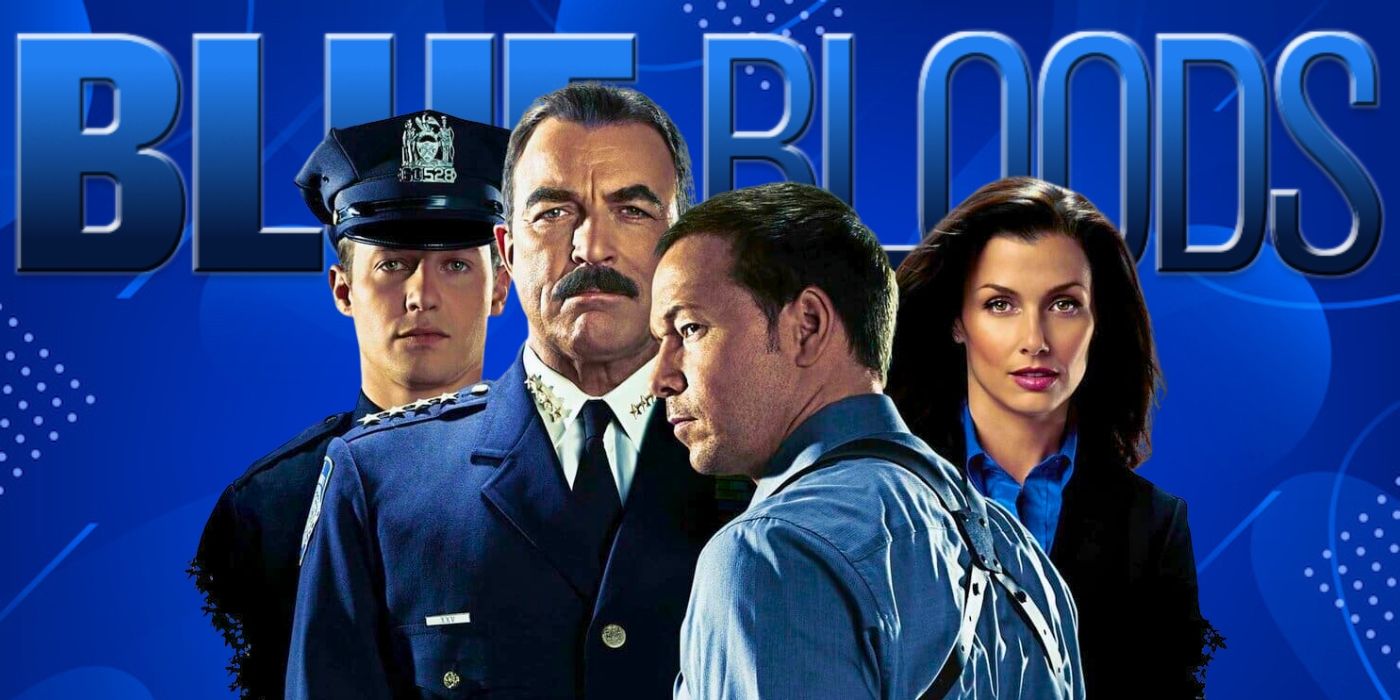
After fourteen years of Sunday dinners, the Reagan family finally cleared the table. It’s over. For a show that survived shifting network priorities, a changing cultural landscape regarding police procedurals, and the sheer logistical nightmare of coordinating a massive ensemble cast for over a decade, the end of Blue Bloods felt less like a cancellation and more like the closing of a massive, leather-bound book.
If you missed the broadcast or just want to relive the emotional beats, the last episode of Blue Bloods was titled "End of Watch." It aired in two distinct parts as the finale of Season 14.
Honestly, it wasn't just about a case. It was about legacy. Fans had been bracing for this since CBS announced the split-season final run, and the pressure on showrunner Kevin Wade to "get it right" was immense. People don't watch this show for the high-speed chases; they watch it for the way Frank Reagan looks at his kids across a roast beef dinner.
The Meat of the Story: What Went Down in "End of Watch"
The finale didn't try to reinvent the wheel. Thank God for that. Instead, it leaned into the core tension that has fueled the series since 2010: the friction between the law, the job, and the blood that binds the Reagans together.
Danny was, as usual, in the thick of it. He teamed up with his long-time partner Maria Baez on a case that felt eerily personal, involving a perpetrator who represented the kind of cyclic violence the Reagans have spent their lives fighting. But the real emotional weight was carried by Frank. Tom Selleck played the final episodes with a sort of weary grace that suggested he knew this was his last time behind the Commissioner’s desk.
There was a heavy focus on the "old guard" versus the "new reality" of policing.
Frank found himself at odds with the Mayor (a recurring theme that never got old) over a specific piece of legislation that threatened the morale of the force. But the twist wasn't a political one. It was a personal reflection on what the NYPD becomes after a Reagan is no longer at the helm.
That Last Sunday Dinner
You can't talk about the last episode of Blue Bloods without talking about the dinner table. It’s the soul of the show.
The final dinner scene was filmed with a palpable sense of finality. According to behind-the-scenes accounts from Donnie Wahlberg and Bridget Moynahan, the tears shed during the filming of that scene weren't entirely scripted. They were real.
In this final gathering, we saw the whole crew. Danny, Erin, Jamie, Eddie, and even the younger generation like Sean. The dialogue wasn't some grand, Shakespearean monologue. It was simple. They talked about the "empty chair"—a nod to Joe Reagan, the brother whose death started the series' narrative arc.
It brought the show full circle.
The final prayer was led by Frank, and his voice cracked just enough to remind everyone that while the Commissioner is a pillar of stone, the father is a man of flesh and blood. They ended on a note of continuity. The world keeps turning, crime keeps happening, but the Reagans will keep eating dinner.
Why the Ending Sparked So Much Debate
Not everyone was thrilled. That's the reality of a long-running series finale. Some fans felt the "End of Watch" title was a bit of a tease, expecting a more tragic ending or a major character death.
Instead, we got something arguably more difficult to pull off: a quiet exit.
There was a sub-plot involving Jamie and Eddie considering their future—specifically regarding starting a family and how that fits into a life of "the job." It was nuanced. It didn't give us a tidy "we're pregnant!" bow, but rather a realistic look at two people choosing to stay in the fight while holding onto each other.
The debate online mostly centered on whether Erin should have finally won the District Attorney race. For years, the show teased her political ambitions. In the end, the writers chose to leave her in a position of integrity rather than just giving her a trophy. It felt honest to her character, even if it frustrated viewers who wanted a "total victory" for the Reagan kids.
The Logistics of the Final Season
Let’s be real—the ending of Blue Bloods was a bit of a mess behind the scenes.
CBS initially wanted to cut costs. The cast and crew actually took a significant pay cut—roughly 25%—just to ensure the show got a proper final season instead of being unceremoniously axed. That says a lot about the culture of that set.
- Part 1 of the Finale: Focused on the "Longest Tenured" aspects of Frank's career.
- Part 2 of the Finale: Focused on the transition of power and the legacy of the name.
The show managed to maintain its ratings until the very end. In an era where streaming dominates, Blue Bloods remained a linear TV powerhouse. It consistently pulled in over 10 million viewers per episode when factoring in delayed viewing. That is unheard of for a Friday night slot.
What the Last Episode Leaves Behind
The legacy of the last episode of Blue Bloods is tied to its refusal to be "preachy."
Throughout its run, the show was often categorized as "conservative" or "traditional," but the finale underscored that its real identity was "familial." It was about the burden of being a public servant.
One of the most poignant moments in the finale was a quiet scene between Frank and his father, Henry (Pop). Len Cariou, playing Henry, has been the "whisperer" of the show. Their conversation about "when to walk away" wasn't just about police work. It was a meta-commentary on the actors leaving these roles.
Pop tells Frank that a man knows he's done when he stops looking forward to the next fight.
Frank’s look in that moment told us everything we needed to know. He was tired. Not of the people, but of the weight.
Semantic Details You Might Have Missed
If you re-watch the last episode of Blue Bloods, pay attention to the props.
The producers snuck in several "Easter eggs" from the pilot episode. The way the napkins were folded, a specific photo on Frank’s mantel, and even the seating arrangement at the table mirrored the very first time we met this family.
Also, the final case involving Danny and Baez had a subtle connection to a perpetrator mentioned way back in Season 3. It wasn't a glaring plot point, but for the die-hard "Blue Bloods" historians, it was a satisfying nod to the show's long-term memory.
How to Process the End of an Era
It’s weird when a show like this ends. It’s been a constant for nearly a decade and a half.
The "End of Watch" isn't just a title for the police; it's a title for the audience. We are no longer on the Reagan beat.
If you’re feeling the void, the best way to move forward is to look at the show’s themes. It argued that institutions are flawed because humans are flawed, but that those institutions are still worth saving. It argued that you can disagree with your family at 5:00 PM and still pass them the potatoes at 6:00 PM.
Actionable Next Steps for Fans
If you've just finished the finale and aren't ready to let go, here is the "post-finale" checklist:
- Watch the "Blue Bloods: Celebrating a Family Legacy" Special: CBS aired a retrospective that includes interviews with the cast that are genuinely moving. You get to see Tom Selleck out of character, which is always a trip.
- The Rewatch Strategy: Start from Season 1, Episode 1 ("Pilot"). Focus specifically on the Joe Reagan mystery. Now that you know how it ends, seeing how the family dealt with the grief in the early days hits much harder.
- Explore the Filming Locations: If you’re ever in New York, many of the exterior shots, including the iconic Reagan house in Bay Ridge, Brooklyn (at least the exterior used for shots), are staples of the neighborhood.
- Follow the Cast’s New Projects: Donnie Wahlberg is back to touring and producing, and Bridget Moynahan has several projects in the works. Supporting their new ventures is the best way to "keep it in the family."
The last episode of Blue Bloods didn't end with a bang or a cliffhanger. It ended with a quiet "Amen" and the sound of silverware clinking against china. And honestly? That was the only way it could have ended. The Reagans are still out there, in our imagination, fighting the good fight and making sure the Sunday roast is never overcooked.
The show may be over, but its impact on the procedural genre—shifting the focus from the "crime of the week" to the "character of the week"—will likely influence TV for the next twenty years. You can find the entire series for streaming on Paramount+ if you need to return to the table.